NADRA CNIC City Codes
The National Database and Registration Authority (NADRA) is a key government organization in Pakistan responsible for managing the national identity database. Established in 2000, NADRA introduced a modern, computerized system to register citizens and issue identity documents, including the Computerized National Identity Card (CNIC).
Over the years, NADRA has played a vital role in identity verification, biometric registration, voter record management, passport facilitation, and digital governance. Every Pakistani citizen is assigned a unique identity number, which is used for legal, financial, and administrative purposes across the country.
What Is a CNIC?
A CNIC (Computerized National Identity Card) is an official identity document issued to Pakistani citizens aged 18 and above. It is mandatory for accessing essential services such as opening bank accounts, obtaining SIM cards, voting in elections, purchasing property, and applying for passports or government programs.
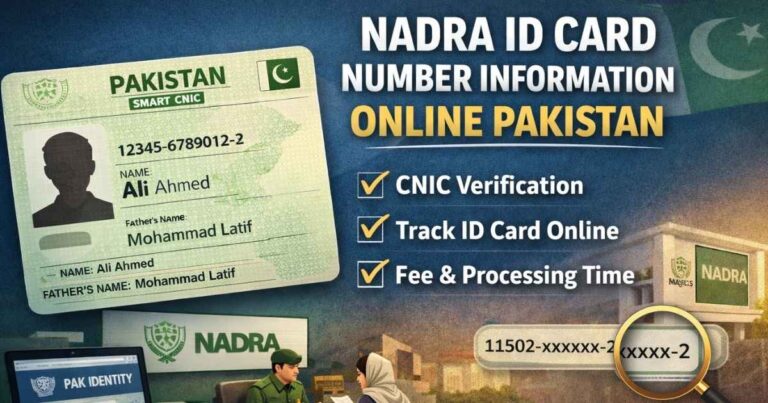
Each CNIC contains a unique 13-digit number, along with the holder’s name, father’s or spouse’s name, date of birth, permanent address, photograph, and biometric data. This standardized system helps reduce identity fraud and ensures accurate national record-keeping.
What Is NICOP?
For Pakistanis living abroad, NADRA issues the NICOP (National Identity Card for Overseas Pakistanis). NICOP serves as proof of Pakistani nationality and allows overseas citizens to access services such as visa-free entry, property ownership, and legal documentation within Pakistan. NADRA also offers online verification facilities for CNIC and NICOP holders worldwide.
Understanding NADRA CNIC City Codes
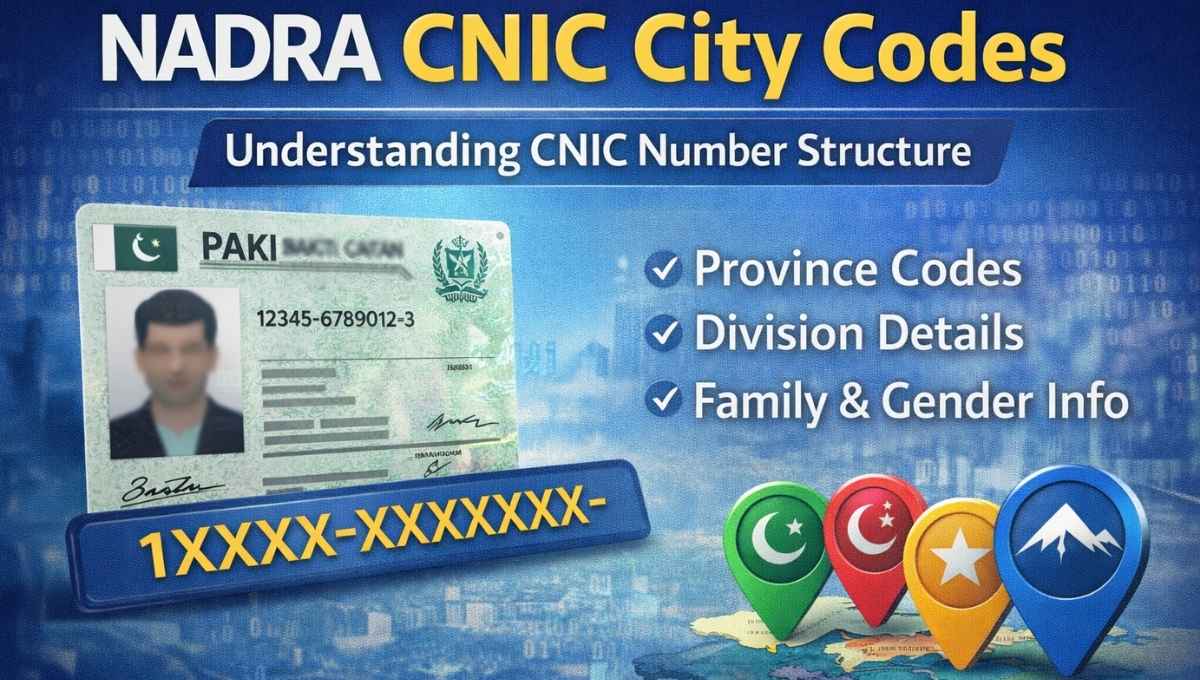
Every CNIC issued by NADRA follows a structured 13-digit format. This number is not random; it contains coded information related to the cardholder’s province, division, district, family registration, and gender.
Understanding CNIC city and region codes helps identify the geographical origin of registration and improves awareness of how NADRA’s identity system works.
Structure of the 13-Digit CNIC Number
The CNIC number is divided into three main parts, each serving a specific purpose.
1. Regional Code (First 5 Digits)
The first five digits represent the province, division, district, tehsil, and union council where the CNIC was originally registered.
The first digit indicates the province or territory:
- 1 – Khyber Pakhtunkhwa
- 2 – Former FATA (merged into KPK)
- 3 – Punjab
- 4 – Sindh
- 5 – Balochistan
- 6 – Islamabad Capital Territory
- 7 – Gilgit-Baltistan
- 8 – Azad Jammu & Kashmir
The remaining digits in this section further narrow down the administrative region.
2. Family Registration Number (Middle 7 Digits)
The middle seven digits represent a family tree code. NADRA uses this number to link parents, spouses, and children within its database. This system ensures accurate family records and simplifies verification for legal and government-related matters.
3. Gender Identifier (Last Digit)
The final digit of the CNIC identifies the gender of the cardholder:
- Odd numbers (1, 3, 5, 7, 9) indicate Male
- Even numbers (0, 2, 4, 6, 8) indicate Female
This coding system helps NADRA maintain structured and accurate demographic data.
CNIC Starting Codes for Pakistani Provinces and Territories
Each province or territory follows a unique CNIC format based on its starting digit:
| Province / Territory | CNIC Format |
| Khyber Pakhtunkhwa | 1XXXX-XXXXXXX-X |
| Former FATA | 2XXXX-XXXXXXX-X |
| Punjab | 3XXXX-XXXXXXX-X |
| Sindh | 4XXXX-XXXXXXX-X |
| Balochistan | 5XXXX-XXXXXXX-X |
| Islamabad | 6XXXX-XXXXXXX-X |
| Gilgit-Baltistan | 7XXXX-XXXXXXX-X |
| Azad Jammu & Kashmir | 8XXXX-XXXXXXX-X |
CNIC Division Codes in Pakistan
Each province is further divided into divisions, and these divisions also have specific CNIC number ranges.
Khyber Pakhtunkhwa Divisions
- Bannu Division – 11XXX-XXXXXXX-X
- Dera Ismail Khan Division – 12XXX-XXXXXXX-X
- Hazara Division – 13XXX-XXXXXXX-X
- Kohat Division – 14XXX-XXXXXXX-X
- Malakand Division – 15XXX-XXXXXXX-X
- Mardan Division – 16XXX-XXXXXXX-X
- Peshawar Division – 17XXX-XXXXXXX-X
Punjab Divisions
- Bahawalpur – 31XXX-XXXXXXX-X
- Dera Ghazi Khan – 32XXX-XXXXXXX-X
- Faisalabad – 33XXX-XXXXXXX-X
- Gujranwala & Gujrat – 34XXX-XXXXXXX-X
- Lahore – 35XXX-XXXXXXX-X
- Multan & Sahiwal – 36XXX-XXXXXXX-X
- Rawalpindi – 37XXX-XXXXXXX-X
- Sargodha & Mianwali – 38XXX-XXXXXXX-X
Sindh Divisions
- Hyderabad – 41XXX-XXXXXXX-X
- Karachi – 42XXX-XXXXXXX-X
- Larkana – 43XXX-XXXXXXX-X
- Mirpur Khas – 44XXX-XXXXXXX-X
- Sukkur & Shaheed Benazirabad – 45XXX-XXXXXXX-X
Balochistan Divisions
- Kalat & Rakhshan – 51XXX-XXXXXXX-X
- Makran – 52XXX-XXXXXXX-X
- Nasirabad – 53XXX-XXXXXXX-X
- Quetta – 54XXX-XXXXXXX-X
- Sibi – 55XXX-XXXXXXX-X
- Zhob & Loralai – 56XXX-XXXXXXX-X
Islamabad Capital Territory
- Islamabad – 61XXX-XXXXXXX-X
Gilgit-Baltistan
- Gilgit, Baltistan & Diamer – 71XXX-XXXXXXX-X
Azad Jammu & Kashmir
- Mirpur – 81XXX-XXXXXXX-X
- Poonch & Muzaffarabad – 82XXX-XXXXXXX-X
How to Check City Name Using a CNIC
You can get a general idea of the registered city or region by analyzing the starting digits of a CNIC number. However, for accurate and updated information, NADRA’s official CNIC verification systems should be used.
By entering the CNIC number into an authorized verification platform, users can confirm registration details, including the associated city or region, while staying within legal and privacy boundaries.
Conclusion
The NADRA CNIC numbering system is carefully designed to store essential information about a citizen’s region, family registration, and gender. This structured approach allows NADRA to maintain accurate national records, reduce identity fraud, and simplify verification processes across Pakistan.
Understanding CNIC city codes not only helps citizens interpret their identity numbers but also increases awareness of how Pakistan’s national identity system functions. For official verification, always rely on NADRA-authorized platforms and services.